Pi Day Coloring: Fun & Engaging Pi Day Activities
Celebrating Pi Day in your classroom or home learning environment requires more than just reciting the number 3.14. It demands an approach that transforms abstract mathematical concepts into tangible, memorable experiences. The Pi Day Coloring | Fun & Engaging Pi Day workbook serves as a comprehensive design asset that bridges the gap between rigorous mathematics and creative expression. This resource is not merely a collection of worksheets; it is a curated set of interactive tools designed to make the irrational number accessible and enjoyable for students in Grades 3 through 6.
Visual Characteristics and Resource Appeal
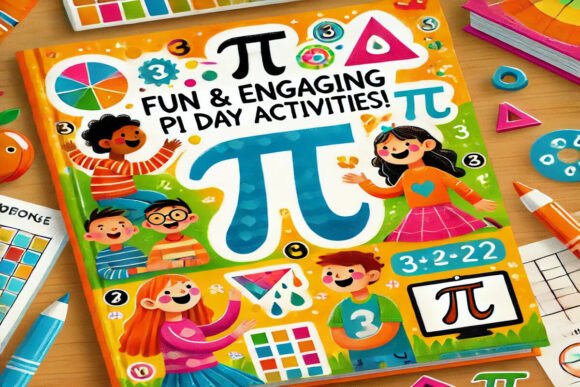
When evaluating educational design assets, the visual hierarchy plays a crucial role in user engagement. The Pi Day Coloring | Fun & Engaging Pi Day workbook utilizes a playful yet structured aesthetic. The illustrations are designed with clear outlines, making them ideal for younger students to practice fine motor skills while coloring. The personality of the pack leans towards a friendly, inviting style rather than a rigid, clinical academic look. This approach helps reduce math anxiety, allowing students to view the subject matter as a creative pursuit.
The style of the graphics within this pack supports a modern typography approach to education. While the focus is on the imagery, the layout respects the principles of visual hierarchy. Headings guide the eye naturally from instructions to activities, ensuring that the student understands the workflow without constant adult supervision. The overall appeal lies in its versatility; it functions equally well as a printed packet or a digital activity on a tablet.
Integrating Math Challenges into Visual Learning
The core strength of the Pi Day Coloring | Fun & Engaging Pi Day workbook lies in its multi-faceted content structure. It moves beyond simple coloring pages by integrating specific math exercises that target key curriculum standards.
Key Educational Components:
- Circumference and Area: The worksheets provide practical problems that require students to apply the value of Pi to calculate the circumference and area of circles. This reinforces the formula application in a low-stakes environment.
- Pi Approximation: Activities included in the pack allow students to explore how Pi is derived and used for approximation, demystifying the concept of irrational numbers.
- Puzzles and Games: The inclusion of Pi-themed puzzles serves as a cognitive break from standard computation, engaging different parts of the brain and maintaining student interest.
For educators and homeschooling parents, the inclusion of an answer key is a critical design feature. It streamlines the assessment process, allowing for immediate feedback. This resource effectively acts as a premium font for mathematical storytelling—where the "typeface" is the language of numbers expressed through visual engagement.
Practical Applications for Educators and Content Creators
Whether you are a classroom teacher, a tutor, or a content creator in the education niche, the Pi Day Coloring | Fun & Engaging Pi Day pack offers significant utility. For those involved in brand identity for educational businesses, using consistent, high-quality activity sheets helps establish professionalism and trust with parents.
Consider these practical use cases:
- Classroom Centers: Use the coloring pages as a quiet station activity while you work with small groups on more complex equations.
- Homeschooling: Integrate the workbook into a week-long unit study on geometry, using the puzzles as Friday rewards.
- Digital Products: If you sell educational bundles on platforms like Teachers Pay Teachers or Etsy, this pack serves as an excellent addition to your inventory of design assets.
Design Strategy and Audience Engagement
From a design perspective, the success of an educational product depends on its ability to hold the user's attention. The Pi Day Coloring | Fun & Engaging Pi Day workbook achieves this through variety. By alternating between creative coloring pages and analytical math exercises, the resource prevents cognitive overload.
For the adult user—whether a teacher, marketer, or parent—the value is in the preparation time saved. Instead of scouring the internet for disparate worksheets, you receive a cohesive package. This mirrors the principles of good editorial design, where the flow of content guides the reader logically from one point to the next.
The visual style of the activities supports web design and social media graphics as well. If you are a blogger documenting your homeschool journey or a teacher sharing classroom wins on Instagram, the aesthetic of these pages is camera-ready. The clean lines and engaging subjects make for excellent visual content, enhancing your online presence without requiring additional graphic design work.
Maximizing the Value of Your Download
To get the most out of the Pi Day Coloring | Fun & Engaging Pi Day resource, consider the following implementation tips:
- Pairing with Physical Manipulatives: Combine the circumference worksheets with physical string and rulers. Have students measure real-world circular objects before coloring the corresponding diagrams.
- Interactive Notebooks: Shrink the printables to fit into composition books. Students can glue the puzzles in and write reflections next to them, creating a tangible record of their learning.
- Differentiated Instruction: The pack is designed for Grades 3-6. Use the simpler coloring pages for younger students or those who need support, while challenging advanced learners with the approximation exercises.
The versatility of this resource makes it a staple for any educator's toolkit. It embodies the concept of a creative font in the educational space—providing the structural "characters" needed to write a successful lesson plan. By focusing on engagement and clarity, the Pi Day Coloring | Fun & Engaging Pi Day workbook ensures that March 14th is not just another date on the calendar, but a highlight of the academic year.
Ultimately, the goal of any educational design asset is to facilitate learning. This pack does so by respecting the student's need for play and the teacher's need for structure. It is a balanced, thoughtful approach to a specific holiday, proving that math education can be both rigorous and delightful.